Volair Shift Review
Paddle Performance
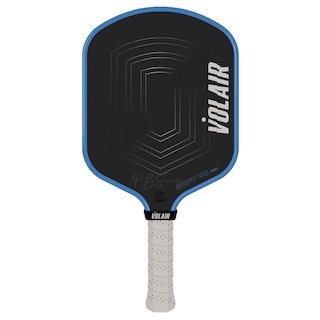
(Widebody 14mm)
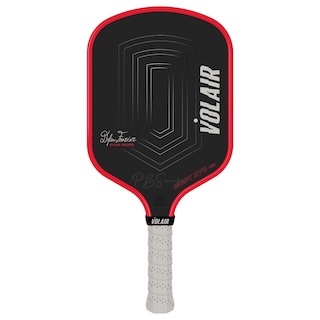
(Hybrid 14mm)
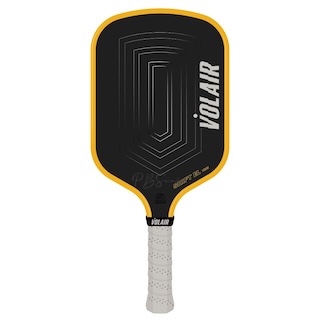
(Elongated 14mm)
Paddle Specs
| Volair Shift | Volair Shift | Volair Shift | |
|---|---|---|---|
| Shape | Widebody | Hybrid | Elongated |
| Core Thickness | 14mm | 14mm | 14mm |
| Core | Full Foam | Full Foam | Full Foam |
| Length | 15.88" | 16.25" | 16.5" |
| Width | 8.12" | 7.75" | 7.5" |
| Grip Length | 5.5" | 5.6" | 5.6" |
| Grip Size | 4.125" | 4.125" | 4.125" |
| Swing Weight | 106 | 116 | 120 |
| Twist Weight | 7.35 | 6.67 | 6.31 |
Paddle specs are based on their official websites.
Actual specs may vary.
Introduction
The Volair Shift line marks a pretty bold step for the brand, built around a fully in-house, patent-pending foam core. Instead of borrowing a standard construction, Volair leaned into a unique full-foam design with carved flex channels that compress and expand on contact. That gives the paddle a more connected, cushioned feel with noticeable dwell time and feedback. The EVA perimeter and carbon-infused edge foam also aim to stabilize the paddle and stretch the usable hitting area, even though the thinner build still keeps the sweet spot on the smaller side overall.
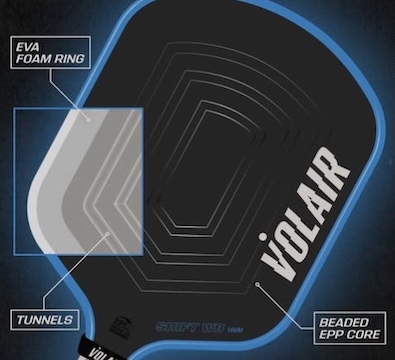
All three shapes share that same foundation, but they don’t play the same. The differences show up clearly once you break things down by performance categories.
Power
The Widebody stands out as the most balanced power option. It brings solid put-away ability without feeling overly demanding or inconsistent. There is enough weight behind the ball to finish points, but it stays controlled and predictable.
The Hybrid holds its own here in terms of raw output, but it comes at the cost of control and requires more effort than the Widebody to manage effectively on full swings. It can still produce solid pace and meaningful power, but it feels less stable and less forgiving when you accelerate through the ball. The added weight translates into usable pop, though it takes more commitment to access cleanly and consistently.
The Elongated version carries similar raw power potential, but it’s harder to access. You can generate heavy shots, especially on drives and serves, but it takes more effort and cleaner contact to unlock it consistently.
Control
This is where the Widebody clearly separates itself. It has the most consistent and forgiving response across the face, which is important given the thinner build. The flex channels and foam construction help it feel more stable and predictable, giving you confidence in resets and placement.
The Hybrid improves slightly over the Elongated in control, but it still feels a bit weighed down. Touch shots are manageable, though not particularly refined.
The Elongated struggles the most here. The combination of a smaller sweet spot and less forgiveness makes control more demanding. That said, players who are used to longer paddles can still make it work.
Hand Speed
The Widebody is by far the quickest in hand. It feels agile, reacts fast at the net, and doesn’t fight you in rapid exchanges. This is a major advantage, especially when paired with its accessible pop.
The Hybrid sits in an awkward middle ground. It is noticeably slower than the Widebody, and the added heft makes it feel less responsive than you would expect from a thinner paddle.
The Elongated is the slowest of the three. It feels the most cumbersome in hand speed situations, which can be a challenge during fast-paced net play.
Pop
Again, the Widebody leads because of how easy its pop is to access. It responds quickly in fast exchanges and doesn’t require perfect timing to get a lively rebound. This makes it especially effective in hands battles and quick counters.
The Hybrid feels more muted. It has some pop, but it is less reactive and can feel slightly sluggish, especially considering its weight.
The Elongated has strong pop when struck well, but similar to its power, it is less forgiving. Off-center hits drop off quickly, which makes it less reliable in quick-fire situations.
Conclusion
The Widebody is the clear standout in overall performance. It offers the best blend of power, pop, control, and hand speed, making it the most complete and usable option in this lineup. It plays the most balanced and compensates best for the naturally smaller sweet spot that comes with a thinner construction.
The Hybrid feels like it gets stuck in between. It carries extra weight without enough upside in return, making it harder to recommend unless you specifically prefer that middle-ground shape.
The Elongated, despite its numbers, has a very specific audience. Former tennis players will feel much more at home with it thanks to the familiar shape and reach. If you have that background, you can unlock its strengths and play it at a high level. For most others, though, it is the least forgiving and the most demanding of the three.
Overall, if performance is the priority, the Widebody is the one that makes the most sense.